

Some designer handbags are doing more than turning heads—they are outperforming stocks and gold as real investments. For collectors and investors, the right bag from brands like Hermès or Chanel combines timeless style with remarkable financial value. Understanding what separates a true investment-grade bag from a fleeting trend can shape your strategy, whether you want lasting beauty or a serious asset in your portfolio. Uncover what makes these iconic bags worth more than their look.
Table of Contents
- Defining Designer Bag Investments
- Types Of Designer Bags Worth Investing In
- Value Retention And Appreciation Factors
- Risks And Challenges Of Bag Investment
- Comparing Handbags With Alternative Investments
Key Takeaways
| Point | Details |
|---|---|
| Designer Bag as Investment | Designer bags like the Chanel 2.55 and Hermès Birkin hold the potential for financial appreciation and cultural significance, functioning as assets beyond typical fashion purchases. |
| Key Investment Factors | Successful investments require assessing brand heritage, craftsmanship quality, design longevity, and limited production to identify bags with genuine appreciation potential. |
| Risks in Investments | Investors face challenges such as counterfeits, market volatility, and preservation needs, which can affect the financial viability of their handbag investments. |
| Alternative Asset Class | Designer bags represent a tangible investment alternative to traditional assets, often providing lower volatility and personal enjoyment alongside potential financial returns. |
Defining Designer Bag Investments
A designer bag investment represents far more than a typical fashion purchase. According to DC Fashion Week, iconic luxury handbags like the Chanel 2.55 and Hermès Birkin are strategic assets that transcend traditional accessory categories, offering potential financial appreciation and cultural significance.
Investment-grade designer bags distinguish themselves through several critical characteristics. These include:
- Exceptional craftsmanship
- Limited production quantities
- Timeless design aesthetics
- High-quality materials
- Renowned brand heritage
Unlike standard fashion accessories, investment bags function as alternative asset classes. DC Fashion Week reports that some iconic designer pieces have even outperformed traditional investment vehicles like stocks and gold over extended periods. This remarkable performance transforms designer handbags from mere accessories into genuine wealth preservation instruments.
Successful designer bag investments require strategic selection, focusing on bags with proven track records of value retention. Collectors and investors should prioritize classic designs from prestigious brands, understanding that not every designer handbag appreciates in value.
 Research, market knowledge, and careful preservation become essential skills for transforming a fashion purchase into a potential financial opportunity. The Art of Craftsmanship: Why High-Quality Handbags Are Worth the Investment provides deeper insights into selecting truly valuable pieces.
Types of Designer Bags Worth Investing In
Investment-worthy designer bags represent more than aesthetic accessories they are strategic financial assets with potential long-term value appreciation. According to Style Guru, emerging designer bags like the Telfar Round Circle Bag and Brandon Blackwood Long Evening Bag combine exceptional craftsmanship with promising resale market potential.
When considering investment-grade bags, certain designer collections consistently demonstrate superior value retention. The Tech Edvocate highlights several iconic crossbody bags renowned for their investment qualities:
- Chanel Classic Flap Bag: Timeless elegance
- Louis Vuitton Pochette Metis: Versatile design
- Hermès Evelyne Bag: Exceptional craftsmanship
- Saint Laurent Loulou Toy Bag: Modern sophistication
- Balenciaga Everyday Camera Bag: Contemporary appeal
Successful bag investments require strategic selection beyond brand recognition. Collectors should evaluate factors like production scarcity, design longevity, historical price performance, and cultural significance. Choosing the Perfect Handbag for Every Occasion offers additional insights into selecting bags with enduring value. Remember that not all designer bags appreciate equally some become cherished collectibles while others depreciate quickly.
Value Retention and Appreciation Factors
Designer bag investment value goes far beyond simple aesthetic appeal. According to Accounting Insights, specific luxury bag models from prestigious brands like Hermès and Chanel demonstrate extraordinary potential for value retention, with iconic pieces like the Birkin and Kelly bags consistently appreciating over time.
Several critical factors determine a designer bag’s investment potential:
- Brand Heritage: Established luxury brands with rich histories
- Limited Production: Scarcity drives collector interest
- Design Consistency: Timeless styles that transcend seasonal trends
- Craftsmanship Quality: Exceptional material and construction standards
- Cultural Significance: Bags that represent more than just accessories
DC Fashion Week emphasizes that value retention is deeply connected to a bag’s intrinsic qualities. Timeless design, meticulous craftsmanship, and brand reputation play pivotal roles in determining long-term financial performance. Serious collectors understand that not every designer bag appreciates equally some become cherished investment pieces while others quickly lose value. How to Care for Your High-Quality Handbag: Tips to Preserve Its Beauty provides essential insights into maintaining a bag’s pristine condition and maximizing its potential investment value.
Risks and Challenges of Bag Investment
Designer bag investments come with nuanced risks that require careful navigation. According to DC Fashion Week, one of the most significant challenges is the prevalence of counterfeits, which can lead to substantial financial losses if an investor unknowingly purchases an inauthentic piece.
Key risks in luxury bag investments include:
- Authenticity Verification: Potential for purchasing counterfeit items
- Market Volatility: Fluctuating demand and collector preferences
- Preservation Challenges: Maintaining pristine condition
- High Initial Investment: Significant upfront capital required
- Limited Liquidity: Difficulty quickly selling specialized pieces
Accounting Insights emphasizes that a bag’s resale potential hinges critically on its physical condition and verifiable provenance. Serious collectors must invest not just in the bag itself, but in professional authentication, careful storage, and meticulous maintenance. Small damages or signs of wear can dramatically reduce a bag’s value, transforming what seemed like a sound investment into a financial disappointment. News provides additional context for navigating these complex investment landscapes, highlighting the importance of strategic, informed decision-making in luxury accessory investments.
Comparing Handbags With Alternative Investments
Designer handbag investments represent a unique and intriguing alternative to traditional financial assets. According to DC Fashion Week, iconic designer pieces like the Hermès Birkin have surprisingly outperformed conventional investments such as stocks and gold over extended periods, transforming luxury accessories from mere fashion statements into legitimate wealth preservation strategies.
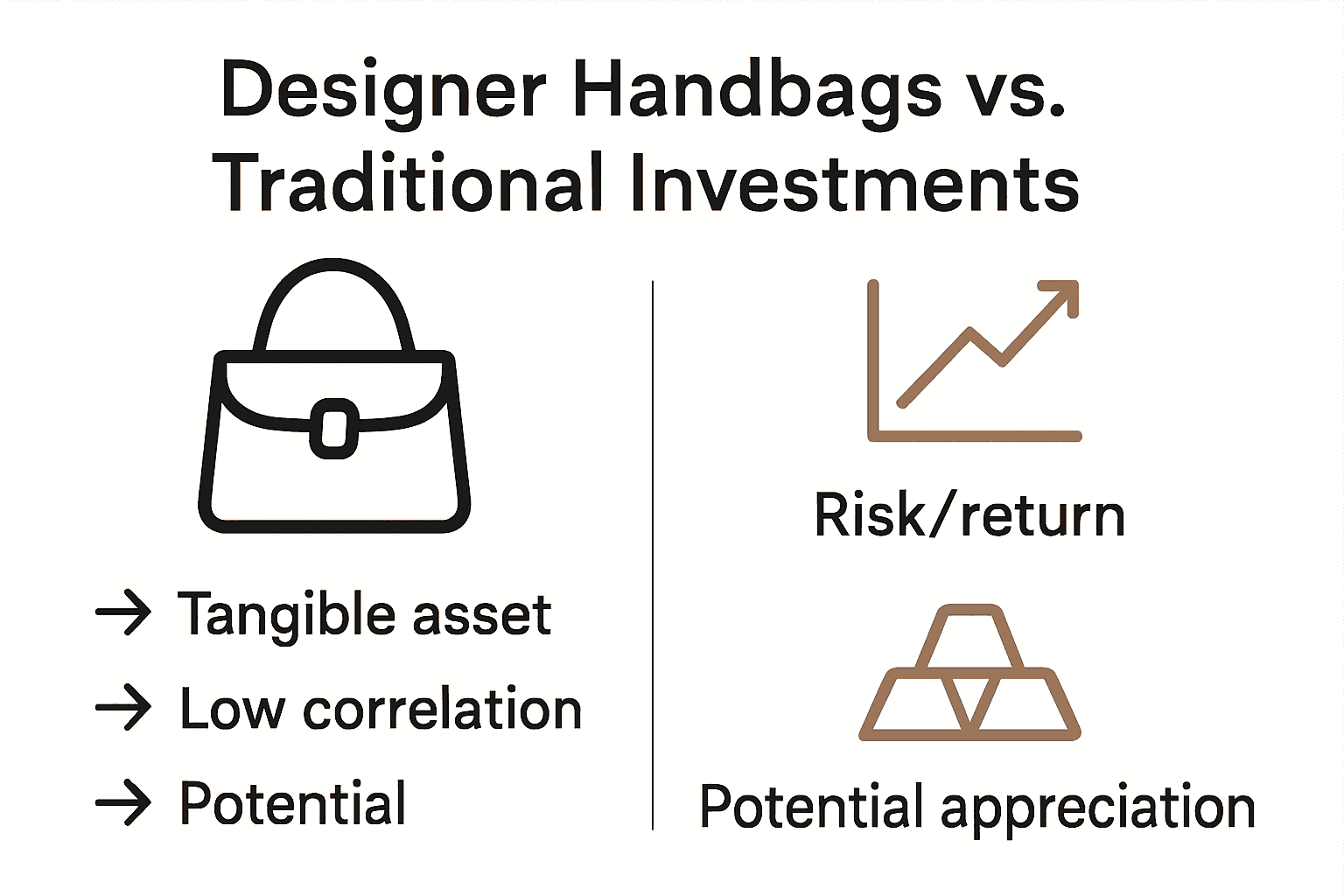
Key comparative characteristics between designer bags and traditional investments include:
- Tangibility: Physical asset with aesthetic value
- Market Independence: Less volatile than stock markets
- Personal Enjoyment: Unlike stocks, bags can be used and appreciated
- Low Correlation: Performance often unrelated to economic cycles
- Potential Appreciation: Select models can increase in value
Accounting Insights highlights that certain luxury bags from prestigious brands like Hermès and Chanel demonstrate remarkable value retention through factors of exclusivity, exceptional craftsmanship, and limited availability. While traditional investments offer numerical returns, designer bags provide a unique combination of financial potential and personal pleasure. Collectors should approach bag investments with the same strategic mindset used in financial portfolio management.
 Handbag4u recommends thorough research and careful selection to maximize investment potential in this distinctive asset class.
Take Your Designer Bag Investment to the Next Level
Investing in designer bags means more than just owning a luxury accessory. You want to choose bags with proven craftsmanship, timeless style, and strong value retention as highlighted in the article. At Handbag4u.com, we understand how crucial authenticity and quality are when making these smart investments. Our curated selection of premium handbags from top brands provides you with options that can become cherished assets as well as elegant statements.

Explore our unique collection today and discover why so many fashion-conscious individuals trust us to secure their designer bag investments. Act now to find bags that blend cultural significance, exclusivity, and style, so you can enjoy both personal satisfaction and potential financial growth. Visit Handbag4u.com and start building a luxury handbag portfolio that lasts.
Frequently Asked Questions
What are designer bag investments?
A designer bag investment refers to luxury handbags that not only serve as fashionable accessories but also as strategic financial assets with potential appreciation over time.
What factors contribute to the value retention of designer bags?
Key factors include brand heritage, limited production, design consistency, quality craftsmanship, and cultural significance, which all play a role in a bag’s investment potential.
How can I ensure the authenticity of a designer bag?
To verify authenticity, it’s crucial to conduct thorough research, seek professional authentication services, and consider the bag’s provenance and physical condition.
What are the risks associated with investing in designer bags?
Risks include the potential for counterfeit purchases, fluctuating market demand, preservation challenges, high initial investment costs, and limited liquidity when reselling specialized pieces.